WITT Gas Controls plans to exhibit at FABTECH 2026, scheduled for October 21–23 at the Las Vegas Convention Center in Las Vegas, Nevada. The company invites attendees to visit Booth S46114 to discuss its MEM+ gas mixers, dome pressure regulators, and gas safety valves, which are intended for precise mixing, stable pressure, and system protection.
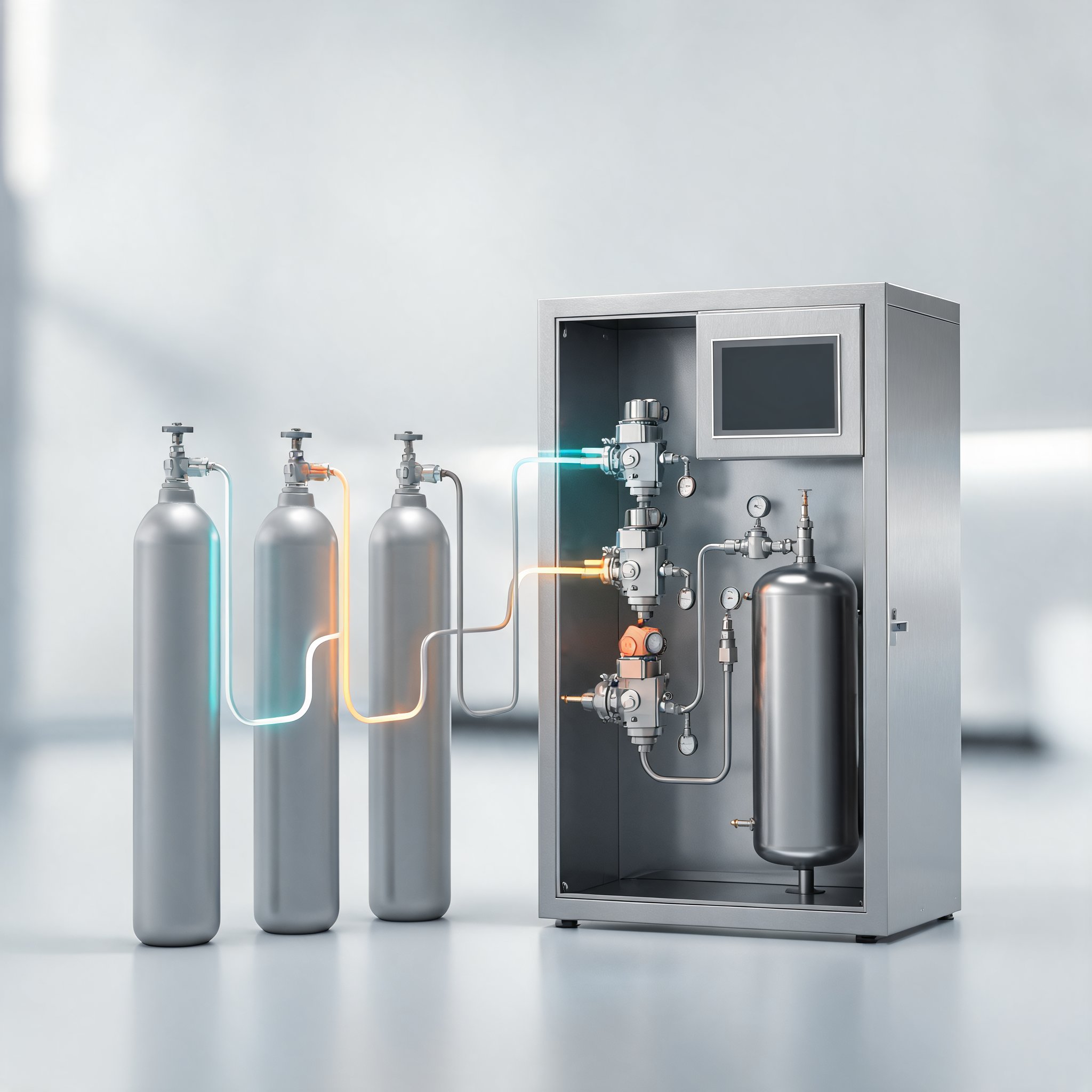
The MEM+ series is designed to mix two or three non-flammable gases, including nitrogen, carbon dioxide, or oxygen, across industrial applications. According to WITT, electronically operated motorized proportional valves allow adjustments in 0.1 percent increments. The system can reach a target mixture in less than three seconds, with accuracy better than ±1% absolute.
Seven interface options—Ethernet, OPC UA, and PROFINET among them—are intended to support integration with existing systems. Users can operate the mixers remotely through a PC, PLC, or machine controller, or through an integrated touchscreen. Pressure equalization is included to compensate for supply pressure fluctuations, while continuous inlet pressure monitoring and pressure alarms are intended to support safe operation. An integrated buffer tank accommodates fluctuating flow rates. The unit is housed in a splash-proof, brushed stainless steel enclosure and supports maximum inlet pressures of 20 bar and maximum outlet pressures of 10 bar.
Pressure regulation and backflow protection
WITT will also highlight dome pressure regulators that use optimized pilot pressure regulators. The design is intended to keep working pressure stable when flow rates and inlet pressures change, supporting consistent process performance and product quality. The improvements can be retrofitted to existing WITT dome pressure regulators without replacing the complete system, the company said.
The ULTRA non-return valves are designed to protect gas systems from unwanted backflow by combining low opening pressures, tight sealing, and minimal flow resistance. The ULTRAVENT safety relief valves are intended to protect against excessive pressure and respond to pressure increases as low as 5 mbar.