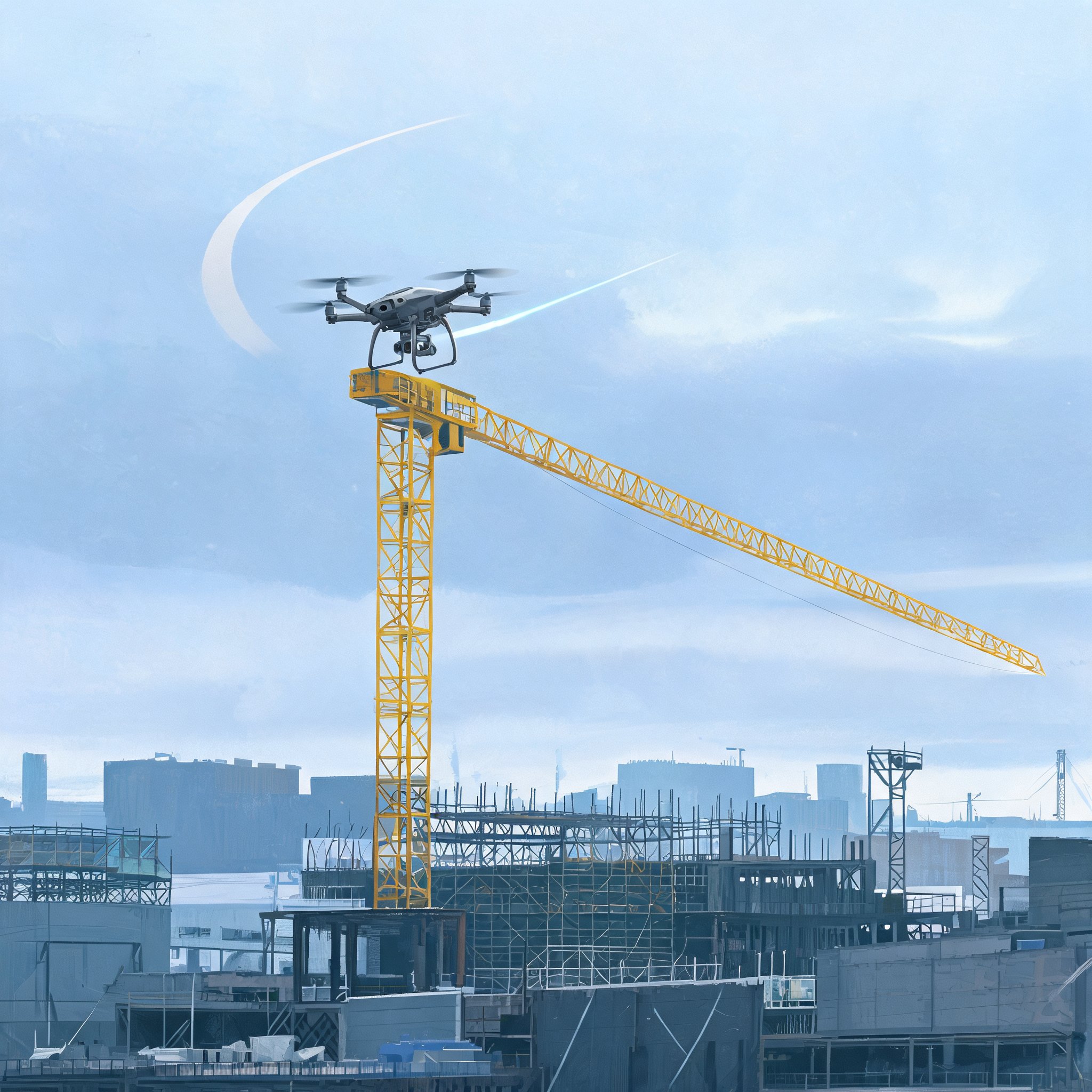
A surveying drone struck the top of a tower crane at a construction site in the Cheetham Hill area of Manchester in August, according to the Air Accidents Investigation Branch (AAIB). The drone fell about 120 metres to the ground after the collision.
The AAIB said the unmanned aircraft was carrying out an aerial survey on a pre-selected flight path over an urban construction site. Its obstacle avoidance feature was enabled, but the drone still hit the crane.
The incident was reported to the AAIB, but no formal investigation was opened. The site and the contractor were not identified in the bulletin.
An internal investigation by the construction company found that the company and its remote pilots may not have fully understood the limitations of the obstacle avoidance software, the AAIB said. The finding points to a possible gap between relying on automated safety features and understanding how they perform around large structures.
The case highlights the need for survey flights in built-up areas to account for crane heights, flight-path planning and the limits of onboard sensors when automated avoidance is used. It also underscores the importance of pilot training and pre-flight checks before operating near tall structures. The AAIB bulletin did not say whether anyone was injured or whether the drone caused damage beyond the fall.