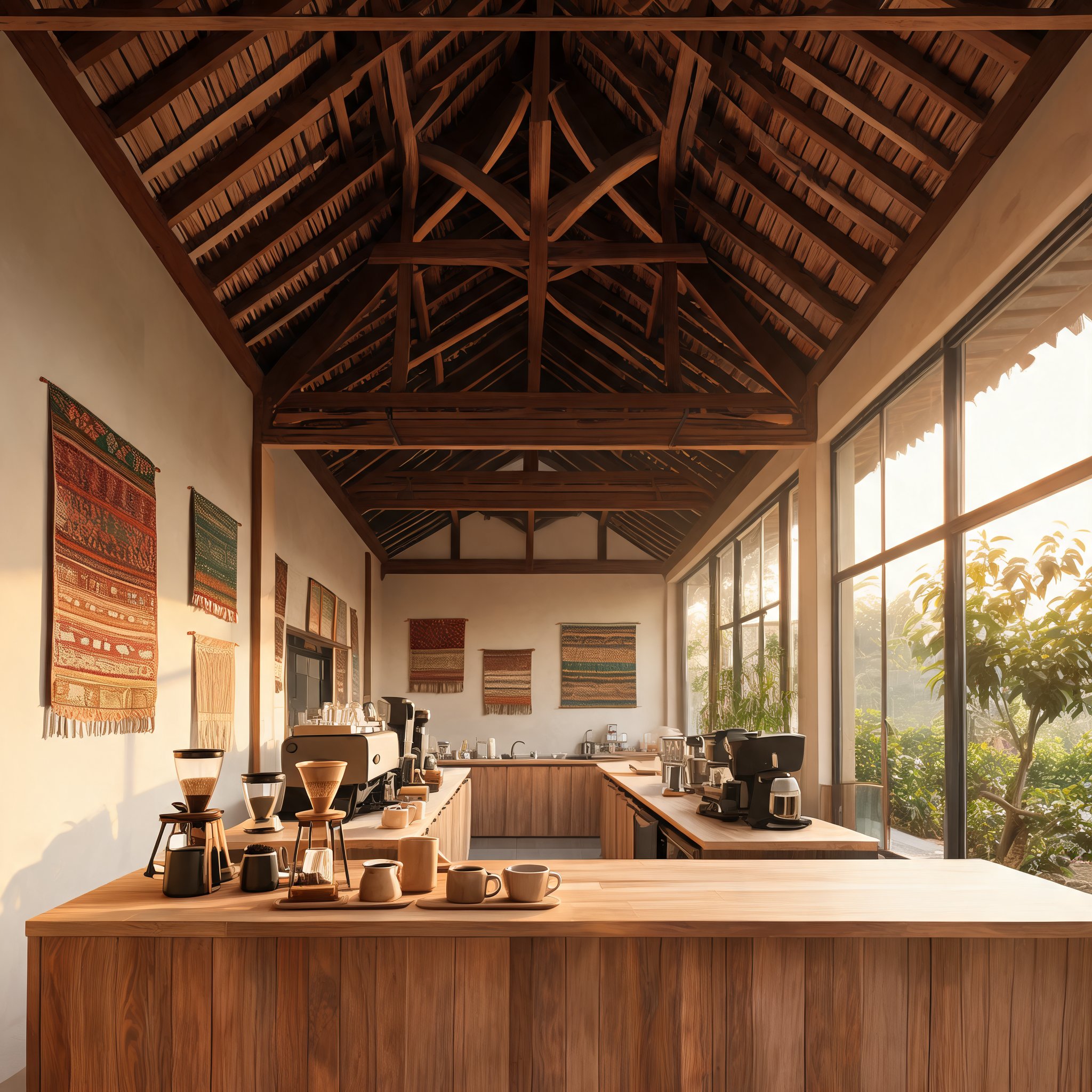
Starbucks has more than 6,000 coffeehouses across Asia Pacific, a threshold the company marked by opening its first location in Buon Ma Thuot, a city in Vietnam’s Central Highlands coffee-growing region.
Chanda Beppu, president of Starbucks Asia Pacific, described surpassing 6,000 coffeehouses as a significant point in the company’s nearly 30-year history in the region. She credited store partners and licensing partners with extending the Starbucks Experience to customers across Asia Pacific. Beppu also said opening in Buon Ma Thuot was fitting because the area is closely associated with the beginnings of Vietnam’s coffee story.
Local references in the store design
The Buon Ma Thuot coffeehouse combines contemporary Starbucks design with cultural references from the surrounding region. Its materials are locally sourced, and its artwork draws on traditional weaving. Architectural details refer to the Rong house, a traditional communal building known for its tall roof and gathering function in parts of the Central Highlands. The design also reflects the path of coffee from bean to cup, according to the company.
Smaller formats support expansion
Starbucks said smaller, more flexible store formats have helped it expand. Adaptable, modular designs can be fitted to different spaces and customer needs, including busy transit hubs, event venues and other locations where a conventional coffeehouse might not suit. In Vietnam, for example, a Starbucks mobile coffee truck serves customers at concerts, events and community spaces.
The 6,000-coffeehouse milestone places the Buon Ma Thuot opening within a broader regional footprint. The company’s account emphasizes local design and format flexibility rather than a single standard store model.