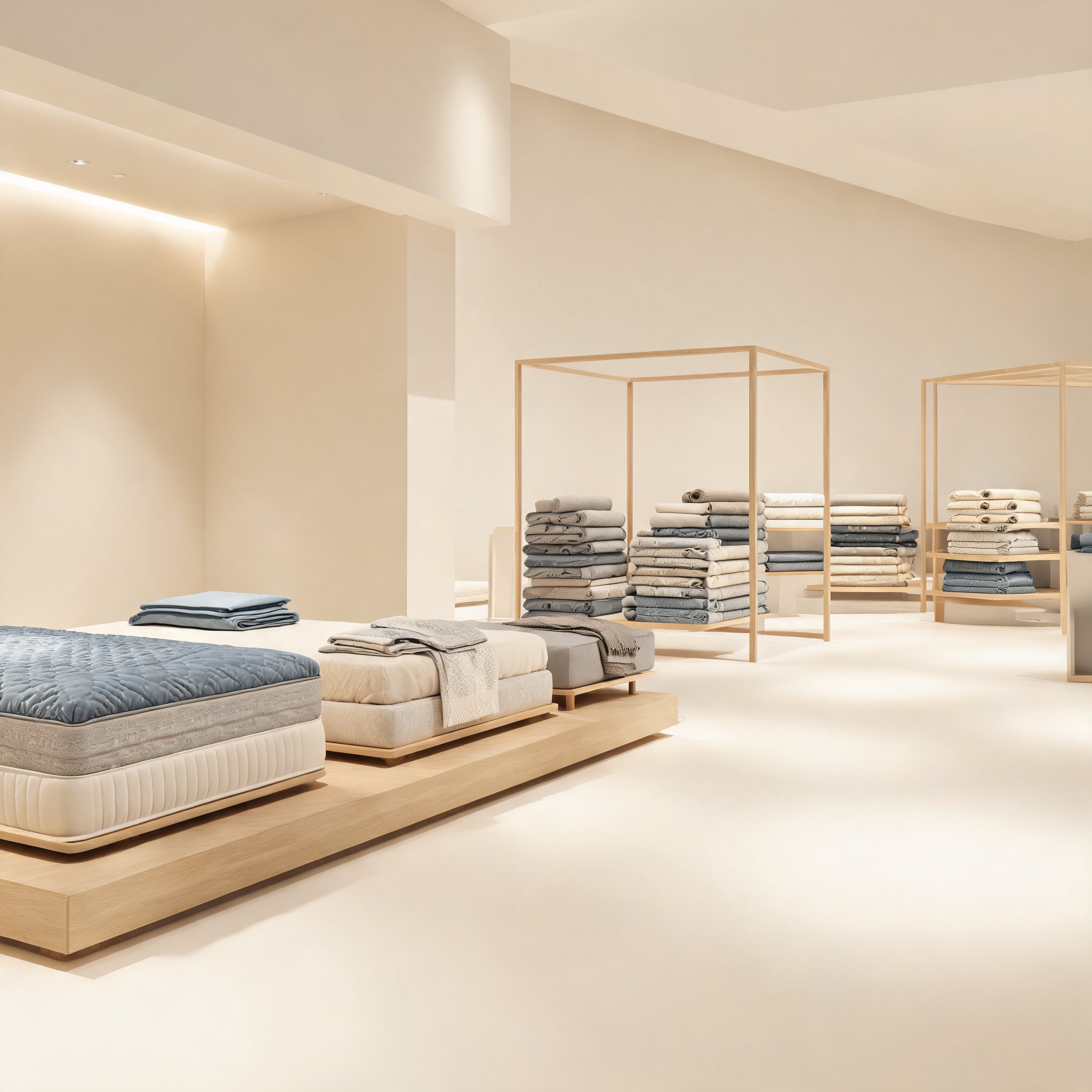
Heimtextil 2027 will broaden its focus on the sleep market when it takes place in Frankfurt am Main from 12 to 15 January 2027. The expanded offering will cover mattresses, sleep systems and bedding, according to the organizer’s announcement.
The event is intended to address bed specialist retailers, volume business and hospitality. Two core areas are named for these groups. Smart Bedding will be presented in Hall 4.0, while international sourcing solutions will be grouped in the Global Home area in Hall 8.0.
The move places sleep-related products within a wider home textiles context. Mattresses, sleep systems and bedding are being treated as a distinct segment with dedicated space and a defined visitor focus, rather than as a peripheral category.
Target groups and product focus
For bed specialist retailers, the expanded segment offers a way to examine products and systems in one setting. For volume business, the international sourcing solutions in Global Home are positioned as a route for procurement. Hospitality is also named as a target group, linking bedding and sleep products to commercial accommodation use.
The announced structure does not provide details on exhibitor numbers, specific brands, product specifications or the programme for the four-day event. What is clear is the allocation of Smart Bedding to Hall 4.0 and Global Home sourcing to Hall 8.0, alongside the January dates.
By concentrating mattresses, sleep systems and bedding in named areas, Heimtextil 2027 is signalling that sleep will have a more visible place in the fair’s product landscape. The extent to which this expansion will translate into new exhibitor participation or product launches will become clear closer to the event.